Well you need to concider alot of aspects before coming to a conclusion. I shall try and sum it up for you in as short a post as possible.
1) Is the weather looking good for tomorrow morning?
Conditions in the atmosphere do not remain constant or change at a constant rate all the way from the surface of the Earth to its uppermost limit. Rather, the atmosphere is layered, and each layer forms a shell around the Earth and is enclosed by the shell outside it.
There is no precise upper boundary to the atmosphere. About 90 percent of its total mass lies between the surface and a height of about 10 miles (16 km), and half of its mass is in the layer below about 3.5 miles (5.5 km). Above 10 miles, the remaining one-tenth of the atmospheric mass extends at least to a height of 350 miles (550 km), although the density of the air there is about one-million-millionth (one-trillionth) of the density at sea level. Beyond that height the atmosphere merges imperceptibly with the atoms and molecules of interplanetary space, and especially with the outer fringes of the Sun's atmosphere.
The lowest layer of the atmosphere is the troposphere. In this layer the air temperature decreases steadily with height at a fairly constant rate known as the lapse rate. It is the region in which all weather phenomena occur. The lowest part of the troposphere, where the movement of air is strongly affected by its contact with the surface, constitutes the planetary boundary layer.
The upper boundary of the troposphere, called the tropopause, is the height at which the temperature ceases to decrease with height. The tropopause is not always continuous over the entire Earth. There are sometimes breaks where one section ends and another begins. Such breaks mark the fronts between atmospheric cells and are associated with the jet streams.
The tropopause forms a very effective physical boundary. Tropospheric air rarely crosses it and only under special circumstances. Vigorous cumulonimbus clouds can pierce it, but their tops do not penetrate far. Volcanic eruptions can project particles of ash and sulfate through the tropopause, but when they do so, a long time, sometimes several years, passes before the particles fall back into the troposphere.
In the lower stratosphere temperature remains constant with height. Then, at about 12 miles (20 km) the temperature begins to increase with height and at about 20 miles (32 km) it increases more rapidly and continues to do so until it reaches another region, where the temperature remains constant with height. This is the stratopause and it forms the upper boundary to the stratosphere. The stratosphere contains the ozone layer.
Only about 0.1 percent of the mass of the atmosphere is located above the stratopause. The layer above the stratopause is called the mesosphere. Above a height of about 35 miles (56 km) the temperature falls rapidly with height all the way to the mesopause, at about 50 miles (80 km), above which lies the thermosphere. The temperature remains constant with height in the lower thermosphere, but at about 55 miles (88 km) it begins increasing rapidly with height. This does not mean the air at this height feels hot. Its temperature is high because atoms and molecules are exposed to intense sunlight, which they absorb; they move faster, but they are too widely scattered to have any appreciable warming effect on a body resting in this air or moving slowly through it.
At the thermopause, which is the upper boundary of the thermosphere, the temperature is sometimes above 1,830° F (1,000° C). The thermopause is between 310 and 620 miles (500–1,000 km) above the surface, its height varying with the intensity of the sunlight.
In the exosphere, which is the outermost layer of the atmosphere, the atoms and molecules are so widely dispersed they may not collide with one another.
2) do you want to risk polluting the atmosphere any more?
The release into the air of gases or aerosols in amounts that may cause injury to living organisms. Certain pollutants can harm humans.
Pollution is not a new phenomenon. In the Middle Ages London air was so polluted by smoke from coal fires that in 1273 Edward I passed a law banning coal burning in an attempt to curb smoke emissions. In 1306 a Londoner was tried and executed for breaking this law. Despite this, pollution was not checked, and on one occasion in 1578 Elizabeth I refused to enter London because there was so much smoke in the air. Smoke killed vegetation and ruined clothes, and the acid in it corroded buildings.
Coal burning remained the most serious source of pollution until modern times. It caused the meuse valley incident in 1930; a severe pollution episode at Donora, Pennsylvania, in 1948; and the London smog incidents a few years later. These led to the introduction of legislation in many countries to reduce smoke emissions.
Certain products of combustion increase the acidity of precipitation, and some acids can be deposited on surfaces directly, from dry air (see acid deposition). This causes the type of pollution known as acid rain, which was first reported in 1852. The burning of those types of coal and oil that contain sulfur is discouraged in order to reduce the problems caused by acid deposition and acid rain.
Photochemical smog occurs naturally in some rural areas, but it becomes a pollution problem where traffic fumes become trapped by an inversion and the sunlight is very intense. Ozone is one product of the chemical reactions among exhaust emissions that are driven by strong sunlight. It causes severe respiratory irritation in quite small concentrations. Where fuel is not completely burned, the oxidation of carbon remains incomplete and carbon monoxide is released. This is poisonous at high doses. Lead pollution, caused by the addition of tetraethyl lead to gasoline, is now decreasing as the use of lead in fuel is phased out.
At present, pollution from vehicle emissions can be dealt with only by improving the efficiency with which vehicle engines burn fuel and by reducing traffic density at critical times. A more effective remedy for the longer term will be the widespread introduction of new types of vehicle propulsion systems that do not burn gasoline or diesel. Diesel engines also emit very fine particulate matter that is believed to cause damage to lung tissue.
Other pollutants are not directly poisonous to any living organism and until recently were not considered to be pollutants at all. Their effects are subtle.
Carbon dioxide is produced whenever a carbon-based fuel is burned, because combustion is the oxidation of carbon to carbon dioxide with the release of heat energy. Carbon dioxide is a natural constituent of the atmosphere, but its increasing concentration, which is believed to be due to the burning of fossil fuels, is suspected of causing global warming. Methane, released when bacteria break down organic material, is also harmless in itself but implicated in undesired change as a greenhouse gas.
CFCs were introduced because they are so chemically inert that they are completely nontoxic (you can safely drink them and even inhale some of them) and nonflammable. Then it was found that they are broken down in the stratosphere by the action of sunlight, releasing chlorine that depletes the ozone in the ozone layer.
Our understanding of air pollution has increased rapidly as scientists have learned more about the chemical characteristics of the atmosphere. At the same time, steps have been taken in many countries to reduce pollution. The air over the industrial cities of North America and the European Union is much cleaner now than it was half a century ago. Today the task facing us is to promote and encourage the economic and industrial development of the less-developed countries without reducing the quality of the air their people breathe.
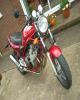
3) Is your bike in top form?
In late August, I bought my second "ten-speed" bike from a cyclist's hangout in Olympia: The Bike Stand. By this time ten-speeds had become 21-speeds and they had taken on new forms: mountain bikes, BMX, and the hybrids. This half- club, half-shop environment stirred up old memories where I purchased my first ten speed in Belmont, California.
My original, lime-green, Peugeot ten-speed had cost $80, which was a huge sum for an unemployed teenager. The lime beauty came equipped with Mafac center- pull brakes and the latest Simplex derailleur. In those days, components were simpler. I could repair a television or radio by taking vacuum tubes down to the drug store for testing and replacement. These components have now passed over into the bone-yard of yesterday's latest-and-greatest. Today, the only tubes I can still repair come from the rims of bikes. Today, the community of Belmont is dwarfed by it's high-tech, southern neighbors from Silicon Valley. Yet, a slim connection remains across time. Components change, by bicycling remains as a simple, pleasurable activity.
In the late summer of 1997, I ponied up the $269 needed to buy an entry-level Raleigh 21-speed bike. By tripling this investment, I was able to add fenders, lights, toe clips, rack, bags, pump, odometer (computer); plus an exercise trainer for the wet wintry months. The Raleigh came with cantilever brakes and an indexed (no-brainer) derailleur, bearing the brand name: Shimano. Looking back, I can now see that I was buying a bike...and a memory.
After acquiring my new Raleigh, I was shortly introduced to a band of cycling devotees, I initially nick-named the "bike crazies." This coven of riding- technocrats gathered once a week in the upstairs loft of the bike shop. The "seminar" leader was looked upon as a local hero. They'd seen his pictures in racing magazines, they knew he consulted for the big bike manufacturers at home and in Taiwan. Bill Stevenson had mastered the art of wheel building and frame design. In many ways, he reminded me of the European craftsman tucked away in his Belmont bike shop. As it turned out, Bill had spent part of his early apprenticeship in the Bay Area, where I grew up. All meaningful experiences are connected.
Bill also gives succinct directions, but his manner is quite laid-back. He begins each bike seminar with a general topic and task, but the agenda is driven by the questions we ask him. Think of it as a Socratic Bike Seminar…Did I mention that he does this for no pay? I'm not sure why. Perhaps he feels a messianic calling to spread the word. He and others in the bike shop will do anything to encourage people to learn and adopt the biking lifestyle and culture. They are busy re-cycling the world of cyclery.
People with many years experience attend this seminar, as well as novices like myself. Bill makes bike care look easy. At my first class I watched a 90 minute demonstration about cleaning a bike. It never dawned on me that cleaning could be so vital and the process so well thought out. Bill encourages. He inspires. He takes his time.
During this year of bicycle re-discovery, I worked on my bike at home, and occasionally on weekends in the bike shop. I progressed from bike washing to de-greasing the chain and rear sprocket cluster. I entered into the mysteries of derailleur adjustments. Slowly, a mechanical confidence emerged. But I ran into the wall when I first attempted brake adjustments. The brake pads needed to be aligned for height, toe in angle, parallelism, symmetry, and various clearances. This meant that my brakes had to be adjusted while watching for about 6000 simultaneous angles. The one regret I had is that Bill made it look too easy. I have since asked that he throw in a few curses and grimaces to make the demonstrations more life-like.
I ended up attending Bill's seminar for over 12 months, longer than any class I have ever taken. I fell in love with the metallic colors, chrome plating, perfectly lubricated chain. One night we re-packed the front hub with new bearings and grease. I watched in awe as he gave wheel a spin; it seemed to roll forever. I wanted to taste that small piece of eternity, and in the next Spring, I decided I would sell my Raleigh and buy one more bike: a custom Stevenson bike. I figured it would be my last bike-a grand companion in the final third of my life. I commemorated the half-century mark by riding a piece of art after my 50th birthday party!
So to breifly summarise. Do you feel confident that the weather will be good, you want to risk pollution, and finally is your bike mechanically sound?
Regards
Mike |


 Help & FAQs
 Search BCF
 Members
 Groups
 Events Calendar







 rating
 rating